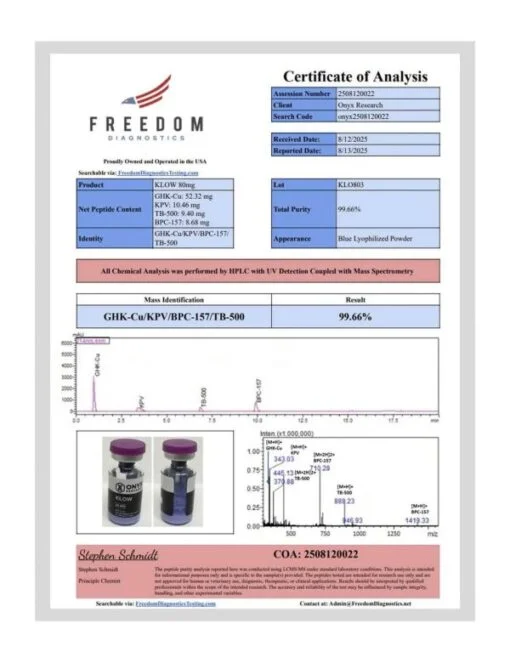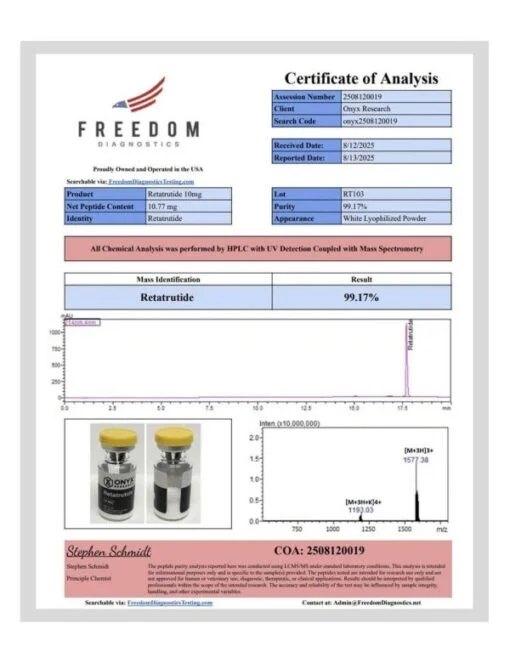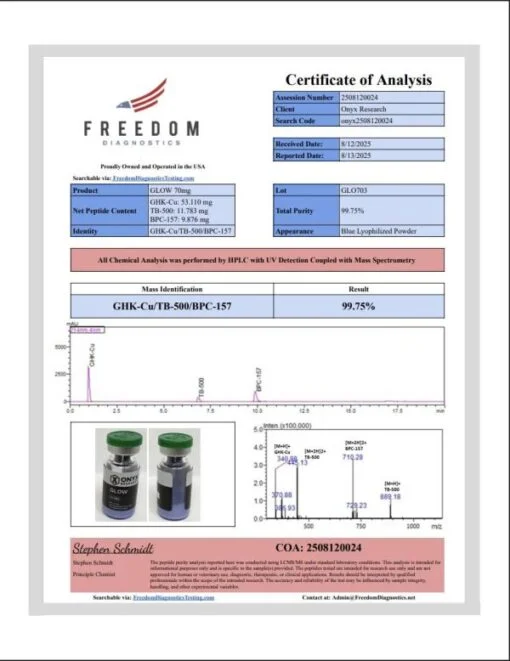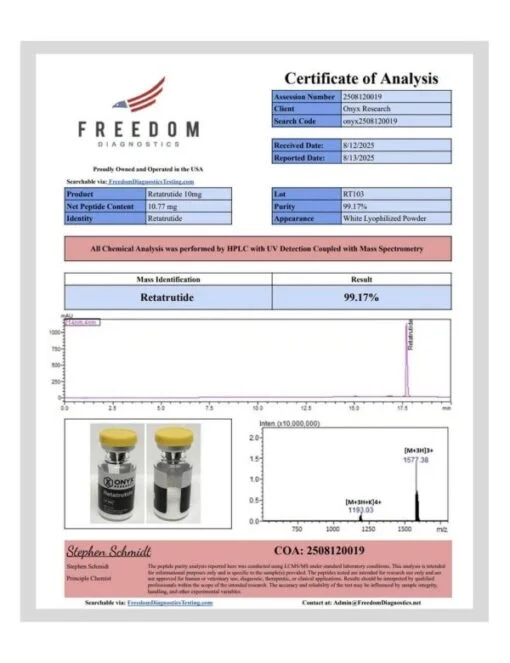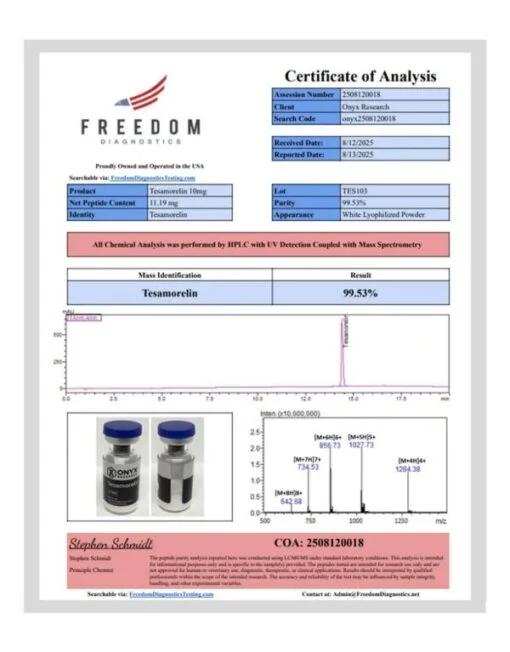

Lab Reports – COA Library
Every batch released by PeptideLabNova is tested by an independent, accredited third-party US laboratory for purity and molecular identity, and the lab reports for that batch are published here — permanently, before you order, not after. If a batch has no published record, it does not ship. There is no inventory that ever slipped past the archive, and there never will be.
This page is the complete lab reports archive for the catalog. Each entry is keyed to one exact batch number, so the certificate you download matches the vials you receive — the same number printed on your vial label. If you are new here, the Shop page lists the catalog and the Learn page explains the terminology behind every figure.
Understanding the Lab Reports: Purity, Identity, Content
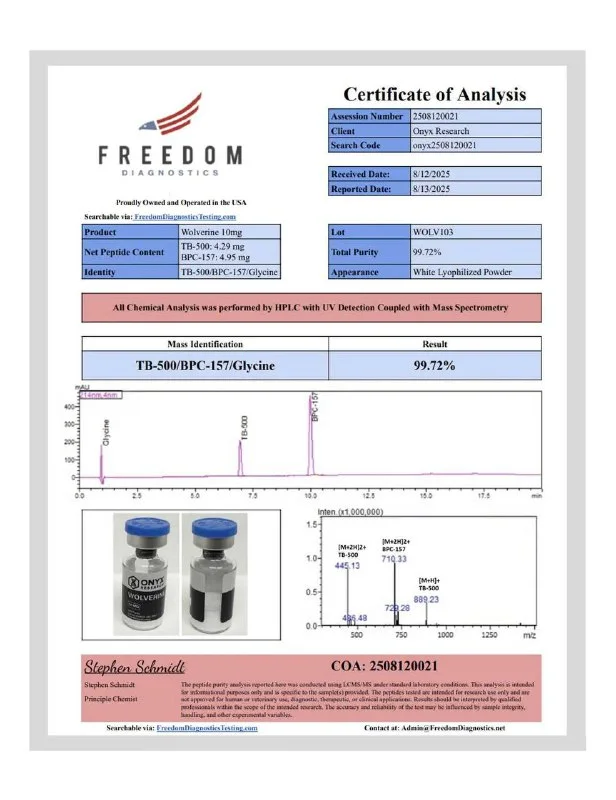
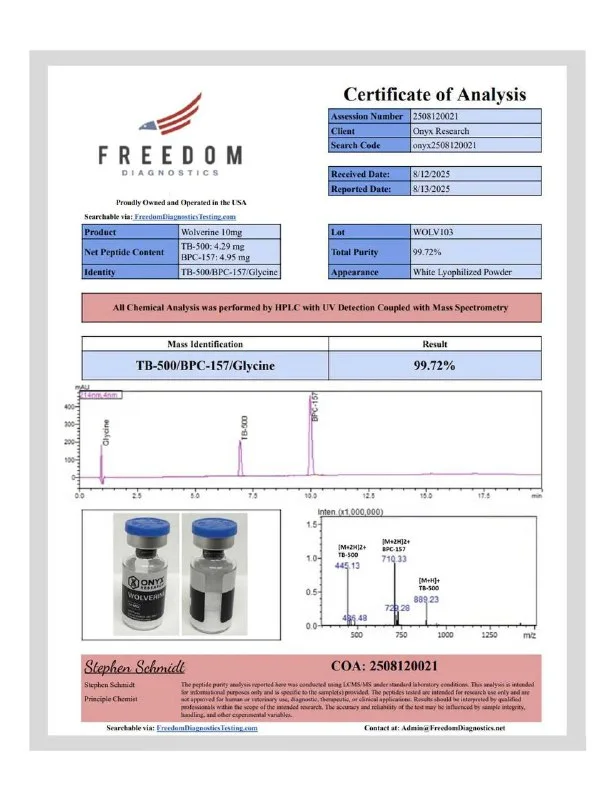
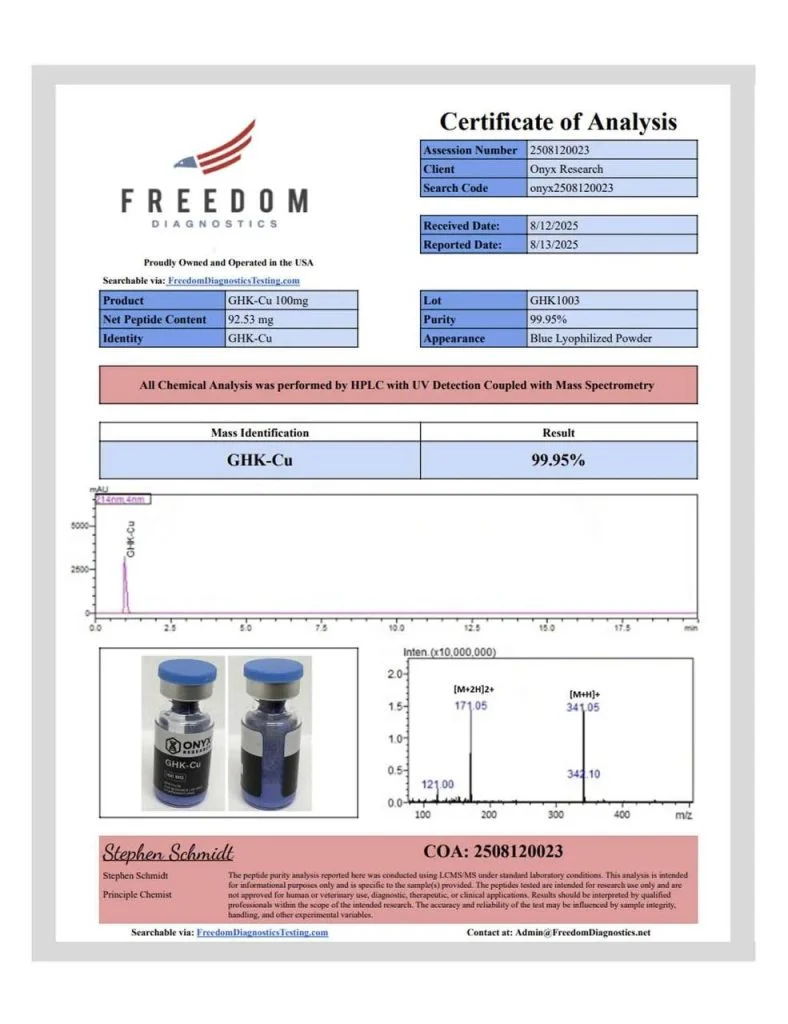
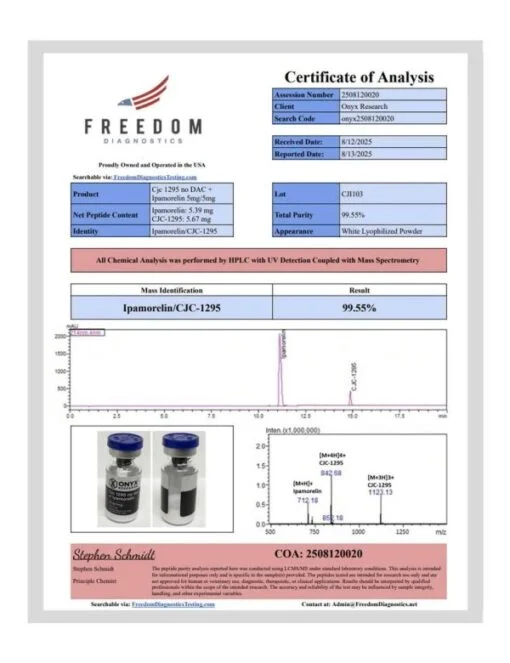
Four figures matter in every certificate, and the lab reports on this page display them side by side for comparison: purity by HPLC, identity by mass spectrometry, net peptide content per vial, and the testing laboratory with its date. Purity is reported as the percentage of the vial contents that is the target peptide — PeptideLabNova shipments test at 98% or better, with identity confirmed on every batch, not sampled once and reused.
Net content deserves a short note because it surprises many first-time buyers: a 5 mg vial can legitimately weigh in at 5.1 mg lyophilized powder. HPLC purity x gross weight yields net peptide content, and a pointer five percent on either side is normal analytical variance, not a defect.
- Purity (HPLC): percentage of the vial that is the target peptide, typically reported at 98% or better.
- Identity (MS): mass-spectrometry confirmation that the molecular weight matches the peptide claimed — shown as “Conforms”.
- Net content: the actual peptide mass in the vial, derived from HPLC purity and gross weight.
- Laboratory and date: the independent third-party facility plus the analysis date, so the record is auditable.
- Document link: the PDF of the certificate, stored permanently for research buyers and procurement teams.
How to Find Your Batch in the Lab Reports
Look for the batch number printed on your vial label, then match it in the table below. The peptide name must match exactly — if a lot number does not appear here, the product was not released for order. For a guided walkthrough of every column, the How to Read a COA guide steps through each figure in plain language.
Every row links to the downloadable COA PDF for that batch. If the PDF for your batch does not open or the number will not match, use the request form below and the team replies within one business day with the correct document.
Certificates of Analysis: Current Batches
| Batch | Product | Size | HPLC Purity | MS Identity | Net Peptide | Date |
|---|---|---|---|---|---|---|
| PLN-2026-001 | BPC-157 | 5 mg | 99.6% | Conforms | 5.1 mg | 2026-09-10 |
| PLN-2026-002 | TB-500 | 10 mg | 99.2% | Conforms | 10.2 mg | 2026-09-10 |
| PLN-2026-003 | Semaglutide | 5 mg | 99.4% | Conforms | 5.0 mg | 2026-09-11 |
| PLN-2026-004 | Retatrutide | 15 mg | 99.5% | Conforms | 15.1 mg | 2026-09-11 |
| PLN-2026-005 | Tesamorelin | 10 mg | 99.1% | Conforms | 10.1 mg | 2026-09-12 |
| PLN-2026-006 | Ipamorelin | 5 mg | 99.3% | Conforms | 5.1 mg | 2026-09-12 |
| PLN-2026-007 | CJC-1295 (No DAC) | 5 mg | 99.0% | Conforms | 5.0 mg | 2026-09-12 |
| PLN-2026-008 | AOD-9604 | 5 mg | 99.4% | Conforms | 5.1 mg | 2026-09-13 |
| PLN-2026-009 | NAD+ | 500 mg | 99.7% | Conforms | 505 mg | 2026-09-13 |
| PLN-2026-010 | KPV | 10 mg | 99.2% | Conforms | 10.1 mg | 2026-09-14 |
Placeholder sample rows. Replace every row with real batch data and real COA PDF links before launch — never publish fake certificate data.
The table above is the live lab reports archive. Rows appear here the moment quality approval signs off and before any inventory is offered for sale — the same gated-release logic our Terms & Compliance page puts in writing. When new batches land, the rows simply extend this table; nothing is ever retroactively edited once published.
Request a Past Certificate of Analysis
Ordered a batch in the past and need the certificate again? Enter your batch number in the form below and the lab reports team emails the PDF within one business day. This is also the fastest route if a download link every breaks or a procurement office requests a second copy for their files.
Form: [WPForms: COA request — batch number + email] until replaced by the form plugin at launch.
How the Testing Behind the Lab Reports Works
Purity is measured by high-performance liquid chromatography (HPLC); identity is confirmed by mass spectrometry (MS). Both tests are ordered through accredited third-party facilities working in the analytical tradition of ISO 17025, a framework any quality office will recognize. The underlying methodology around peptide analysis is documented in the peer-reviewed methods indexed on PubMed, for buyers who want to compare protocols.
Because the tests are batch-specific, the results published here belong to the exact lot in your hand, not to a representative sample from three years ago. That permanence is what makes published lab reports different from “available on request” PDFs: the documentation cannot quietly change after an order ships.
Quality is a loop, not a checkbox. If a test ever fails, the batch is destroyed or quarantined — it is not relabeled, reblended or sold at a discount. The archive tells the whole story, and the story is rebroadcast on every product page via each product copy box.
One habit keeps a study file defensible: verify a certificate before you order, not after. Every lookup on this page resolves directly to the lab report entry for your exact lot, and because the archive is cumulative, documentation you checked last quarter remains addressable for audit. Past batch numbers that predate the online archive are still retrievable through the request desk below — include the batch code and your invoice number.